
Welding Fixture vs Welding Positioner: What’s the Difference?
When manufacturers begin exploring robotic welding, they quickly encounter two terms that are often used interchangeably:
Welding Fixture and Welding Positioner
At first glance, both seem to serve the same purpose—they hold the workpiece during welding. However, they perform very different functions within a robotic welding cell.
Understanding the distinction is critical because many welding automation projects fail to achieve their expected productivity due to poor fixture design, improper workpiece positioning, or confusion between the two systems.
In simple terms:
A fixture holds the part. A positioner moves the part.
While that sounds straightforward, there is much more to the story.
Why Understanding the Difference Matters
Many companies focus heavily on selecting the robot, welding power source, and positioner while treating the fixture as an afterthought. This is often a costly mistake. Even the most advanced robot cannot consistently produce high-quality welds if:
- The part is not located accurately,
- Components shift during welding,
- Weld joints vary from part to part,
- The robot cannot access critical weld locations.
Likewise, a perfectly designed fixture cannot compensate for poor workpiece orientation if welds must be performed in difficult positions.
Both systems must work together to achieve:
- High weld quality
- Process repeatability
- Fast cycle times
- Low rework rates
- Efficient robot utilization
What Is a Welding Fixture?
A welding fixture is a mechanical device designed to locate, support, and secure a workpiece during welding. Its primary purpose is to ensure that every part is positioned in exactly the same location every time. The fixture creates a repeatable manufacturing environment for the robot. Without repeatability, robotic welding becomes extremely difficult.
The Main Functions of a Welding Fixture
A welding fixture typically performs four critical functions.
- Locating the Part
The fixture establishes the precise position of the workpiece within the robotic cell. This ensures that the robot always finds the weld joints in the expected location.
- Supporting the Workpiece
Many welded assemblies consist of multiple components that must be held in place before welding begins. The fixture provides structural support during assembly and welding operations.
- Clamping Components
Clamps prevent movement caused by:
- Thermal expansion
- Welding distortion
- Vibrations
- Handling forces
Without proper clamping, dimensional variation can quickly become a quality issue.
- Maintaining Repeatability
Repeatability is the foundation of robotic welding. The robot assumes that every part is positioned identically. The fixture is responsible for making that assumption true.
What Is a Welding Positioner?
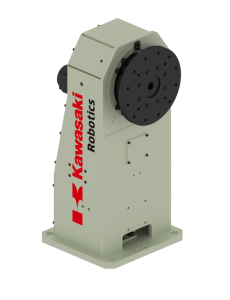
A welding positioner is a motorized device designed to move the workpiece during welding. Instead of holding the part in a fixed orientation, the positioner rotates, tilts, or reorients the assembly so that welds can be performed in the most favorable position. The positioner improves access, quality, and productivity by moving the workpiece rather than forcing the robot to reach difficult locations.
The Main Functions of a Welding Positioner
- Rotating the Workpiece
Many positioners continuously rotate parts during welding.
Common examples include:
- Pipes
- Cylinders
- Pressure vessels
- Tubular assemblies
- Tilting the Workpiece
Dual-axis positioners allow the workpiece to be tilted into optimal welding positions. This is especially useful for structural weldments and machine frames.
- Improving Weld Accessibility
Positioners allow the robot to maintain proper torch orientation and access difficult weld locations.
- Increasing Productivity
Reducing robot motion and improving weld orientation often leads to significantly shorter cycle times.
Fixture vs Positioner: A Simple Comparison
| Feature | Welding Fixture | Welding Positioner |
| Primary Function | Holds the part | Moves the part |
| Motion | Usually stationary | Rotates and/or tilts |
| Purpose | Repeatability | Accessibility and productivity |
| Power Required | Usually none | Servo-driven |
| Robot Integration | Indirect | Direct |
| Impact on Quality | Position accuracy | Welding orientation |
| Typical Design | Custom-built | Standard or customized |
The simplest way to remember the difference is:
Fixture = Workholding
Positioner = Workpiece Movement
How Fixtures and Positioners Work Together
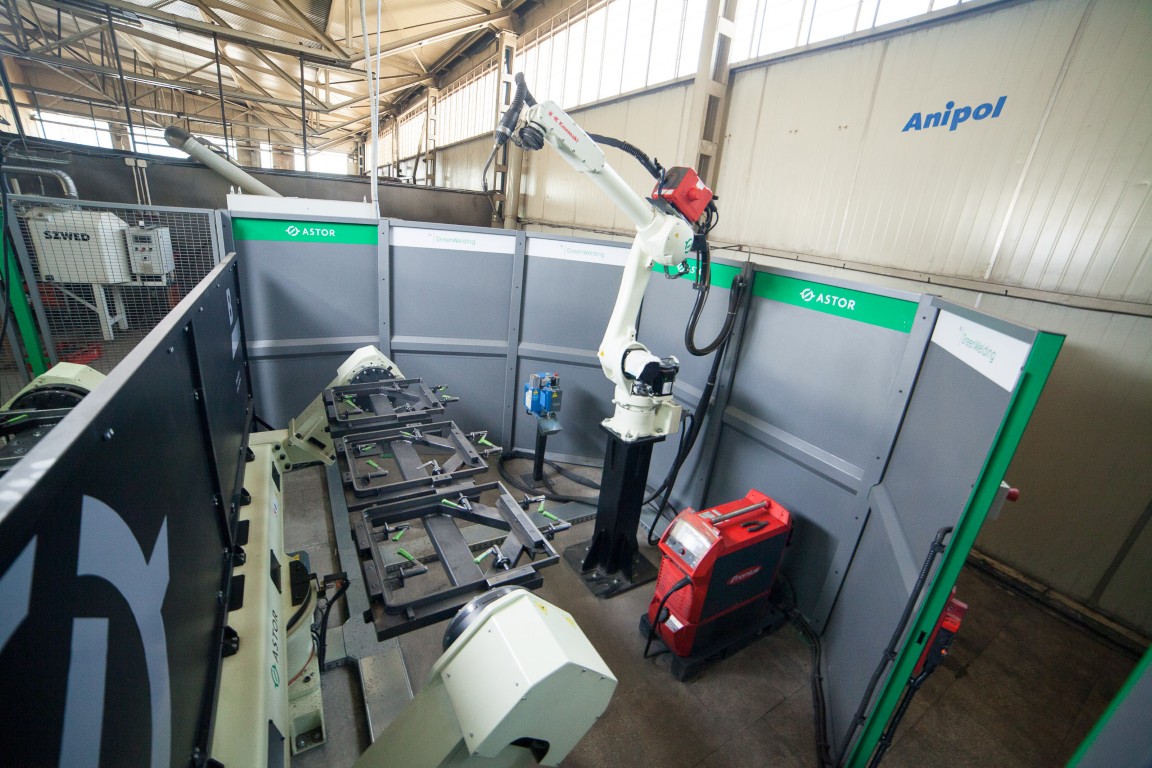
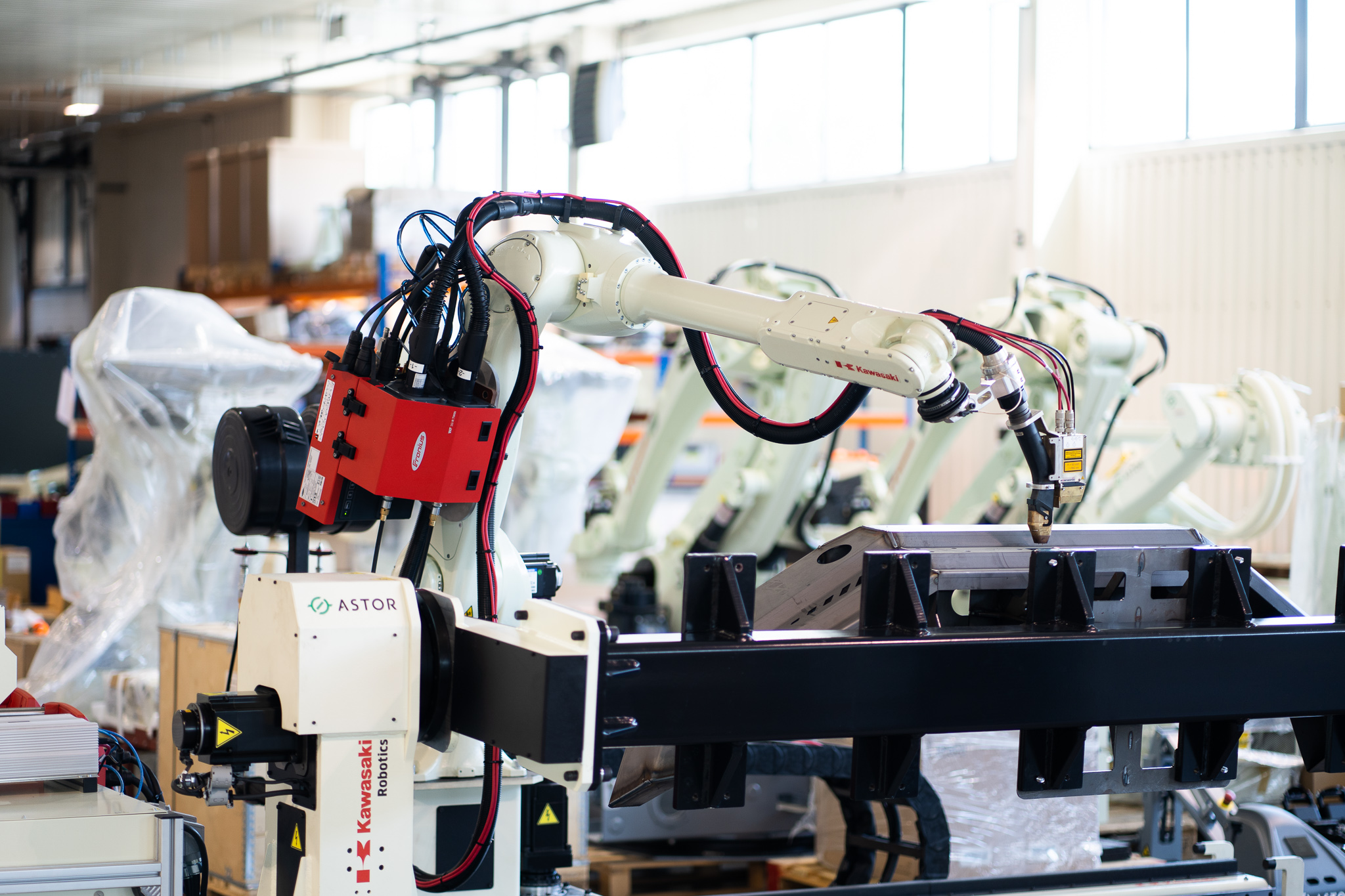
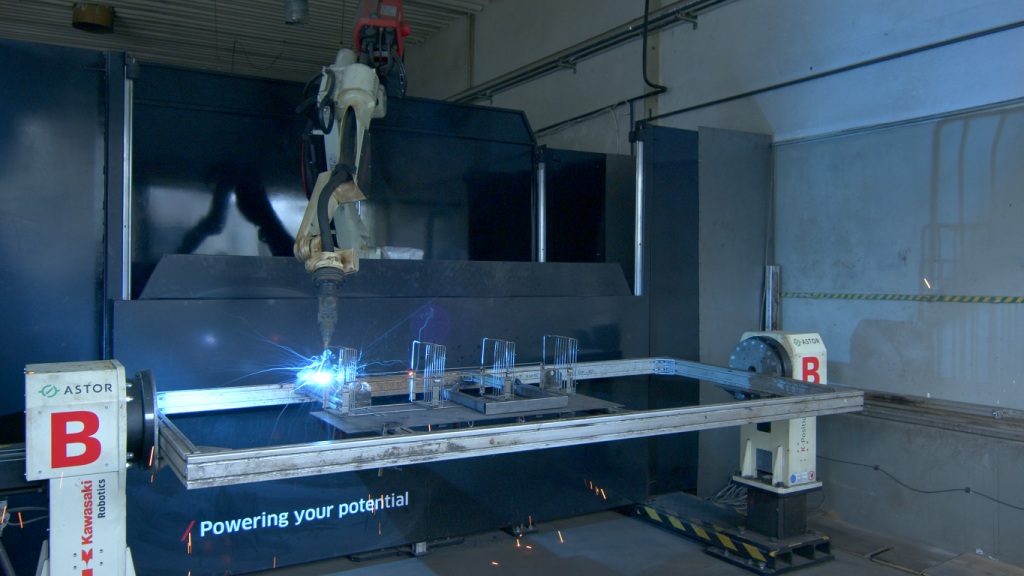
In most robotic welding cells, the fixture is mounted directly on the positioner. The fixture secures the workpiece. The positioner moves the fixture and workpiece together. This combination creates a highly repeatable and efficient welding process.
The Fixture
- Locates frame components
- Holds parts in place
- Maintains dimensional accuracy
The Positioner
- Rotates the frame
- Tilts the assembly
- Presents weld joints to the robot
The robot can then weld continuously without encountering difficult positions or accessibility issues.
Positioner rotating during work.
Why Fixture Design Often Has a Bigger Impact Than Expected
Many automation projects focus heavily on robot programming and positioner selection. However, poor fixture design can create problems that no robot can solve.
Common fixture-related issues include:
- Part variation
- Excessive distortion
- Poor weld accessibility
- Long loading times
- Difficult changeovers
A well-designed fixture can dramatically improve:
- Product quality
- Throughput
- Robot utilization
- Operator efficiency
In many cases, fixture optimization delivers a greater productivity gain than upgrading the robot itself.
Dedicated Fixtures vs Modular Fixtures
There are two primary approaches to fixture design.
Dedicated Fixtures
Dedicated fixtures are designed for a single product.
Advantages:
- Maximum rigidity
- Fast cycle times
- High repeatability
Disadvantages:
- Limited flexibility
- Higher costs for product changes
Modular Fixtures
Modular fixtures use adjustable components that can accommodate multiple products.
Advantages:
- Greater flexibility
- Lower tooling investment
- Faster introduction of new products
Disadvantages:
- More complex setup
- Potentially longer changeover times
Manufacturers producing high-mix, low-volume products often prefer modular solutions.
Why Positioners Cannot Fix Poor Fixtures
One of the most common misconceptions in robotic welding is that a positioner can compensate for poor fixture design.
It cannot.
If a fixture allows parts to shift, flex, or vary between cycles:
- Weld locations change
- Robot paths become inaccurate
- Quality problems increase
The positioner simply moves the entire assembly. It does not improve part accuracy. This is why fixture design should always be addressed before optimizing robot motion.
Common Mistakes When Designing Fixtures and Positioners
Designing Them Separately
Fixtures and positioners should be developed as a single integrated system.
Ignoring Fixture Weight
Fixtures often represent 20–50% of the total payload.
This directly affects positioner sizing.
Poor Center of Gravity Placement
An improperly designed fixture can create excessive torque loads on the positioner.
Focusing Only on Accessibility
A fixture must balance accessibility with rigidity and repeatability.
Neglecting Future Product Variations
Many manufacturers underestimate future production flexibility requirements.
Which Is More Important?
This is a common question. The answer is simple:
Neither.
A robotic welding cell requires both. A fixture without a positioner may limit productivity. A positioner without a fixture cannot provide repeatability.
The highest-performing welding systems combine:
- Accurate fixtures
- Proper workholding
- Effective positioning
- Coordinated robot motion
These elements work together to create a reliable and efficient manufacturing process.
Conclusion
Although welding fixtures and welding positioners are often mentioned together, they serve fundamentally different purposes.
The fixture is responsible for locating, supporting, and securing the workpiece.
The positioner is responsible for moving the workpiece into the optimal orientation for welding.
Successful robotic welding systems rely on both. When properly designed and integrated, fixtures and positioners improve weld quality, increase productivity, reduce cycle times, and maximize the return on investment of robotic automation.
For manufacturers planning a robotic welding project, understanding the difference between these two technologies is one of the most important steps toward building a successful welding cell.