
What Is a Welding Positioner and How Does It Work?
When companies begin evaluating robotic welding systems, most of the attention is focused on the robot itself. Questions about payload, reach, welding power sources, and programming typically dominate the discussion.
However, experienced welding engineers know that one component often has a greater impact on productivity and weld quality than the robot:
The welding positioner.
A properly selected welding positioner can dramatically improve weld quality, reduce cycle times, simplify robot programming, and increase overall system throughput.
In this article, we’ll explain what a welding positioner is, how it works, and why it plays a critical role in modern robotic welding cells.
What Is a Welding Positioner?
A welding positioner is a motorized device that rotates, tilts, or reorients a workpiece during the welding process.
Its primary purpose is to place weld joints in the most favorable welding position, allowing the welder—or robot—to maintain optimal torch orientation throughout the welding operation.
Rather than forcing the welding process to adapt to the part, the positioner moves the part to suit the welding process.
In robotic welding applications, the positioner is often integrated directly into the robot controller and functions as an external axis.
Why Are Welding Positioners Important?
The quality of a weld is heavily influenced by its welding position.
In manual and robotic welding, the most desirable position is typically the flat position because it provides:
- Better weld penetration
- Higher travel speeds
- Reduced spatter
- Improved bead appearance
- Lower defect rates
Without a positioner, many welds must be performed in vertical, overhead, or difficult access positions.
A welding positioner continuously rotates or tilts the part so the weld remains in the optimal orientation throughout the process.
This improves both quality and productivity.
How Does a Welding Positioner Work?
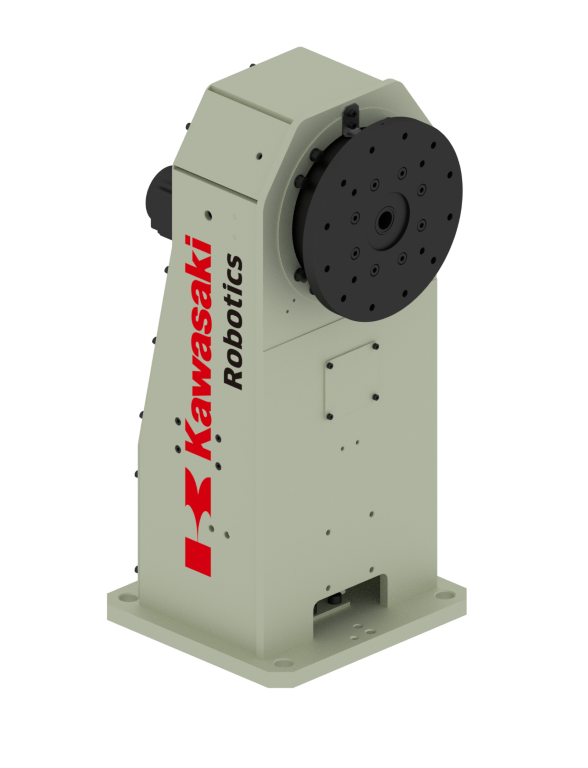
At its core, a welding positioner is a controlled mechanical system designed to move a workpiece during welding.
A typical system consists of:
- Rotating Table
The table supports the fixture and workpiece. Depending on the application, it may rotate continuously or move to specific programmed positions.
- Tilting Mechanism
Many positioners include a tilt axis that allows the workpiece to be angled relative to the welding torch. This provides greater flexibility and accessibility.
- Servo Drive System
Modern welding positioners use servo motors and precision gearboxes to achieve accurate positioning and smooth motion. Servo control allows repeatable movement and synchronization with robotic systems.
- Control System
The positioner is connected to the robot controller or PLC. The controller coordinates the movement of the robot and positioner to ensure precise welding trajectories.
- Grounding System
Because welding generates high electrical currents, industrial positioners incorporate dedicated grounding systems to prevent current from damaging bearings and drive components.
Common Types of Welding Positioners
Different applications require different configurations. Here are basic types of positioners:
- Single-Axis Positioners
Single-axis positioners rotate a part around one axis.
They are commonly used for:
- Pipes
- Cylinders
- Flanges
- Round assemblies
These systems are simple, reliable, and cost-effective.
- Dual-Axis Positioners
Dual-axis positioners combine:
- Rotation
- Tilt
This allows the workpiece to be presented at virtually any angle.
Dual-axis systems are among the most common solutions in robotic welding.
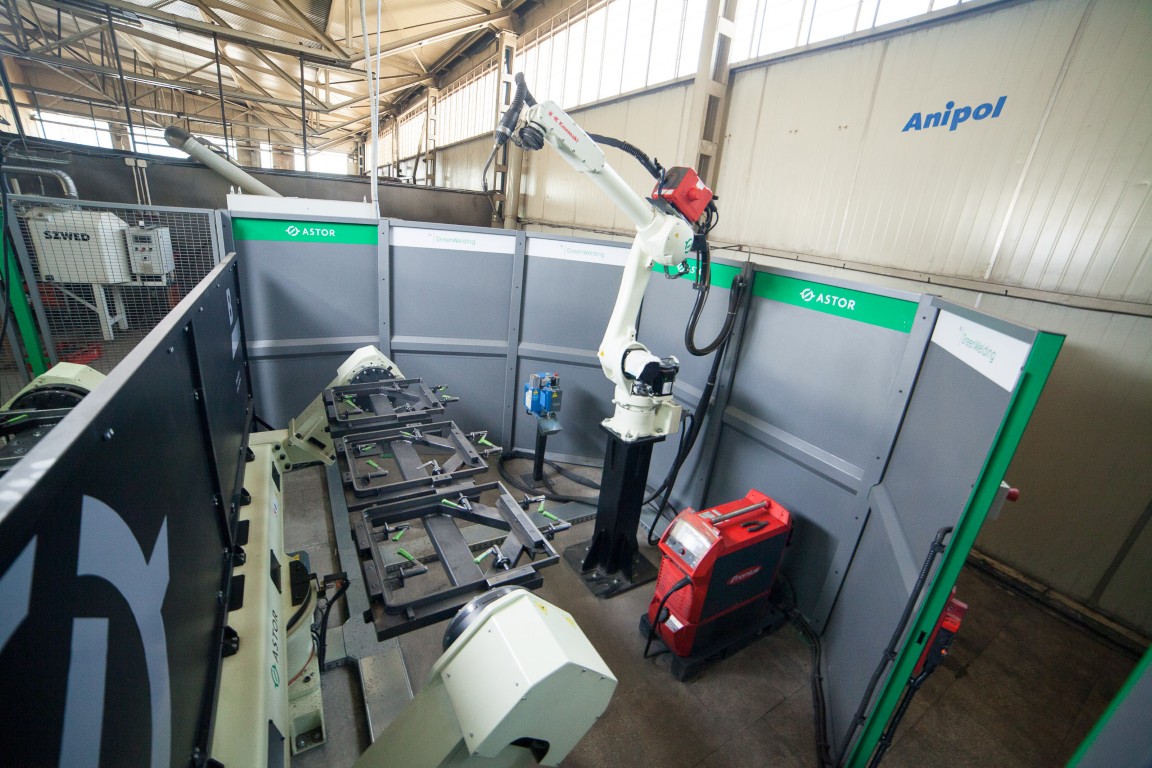
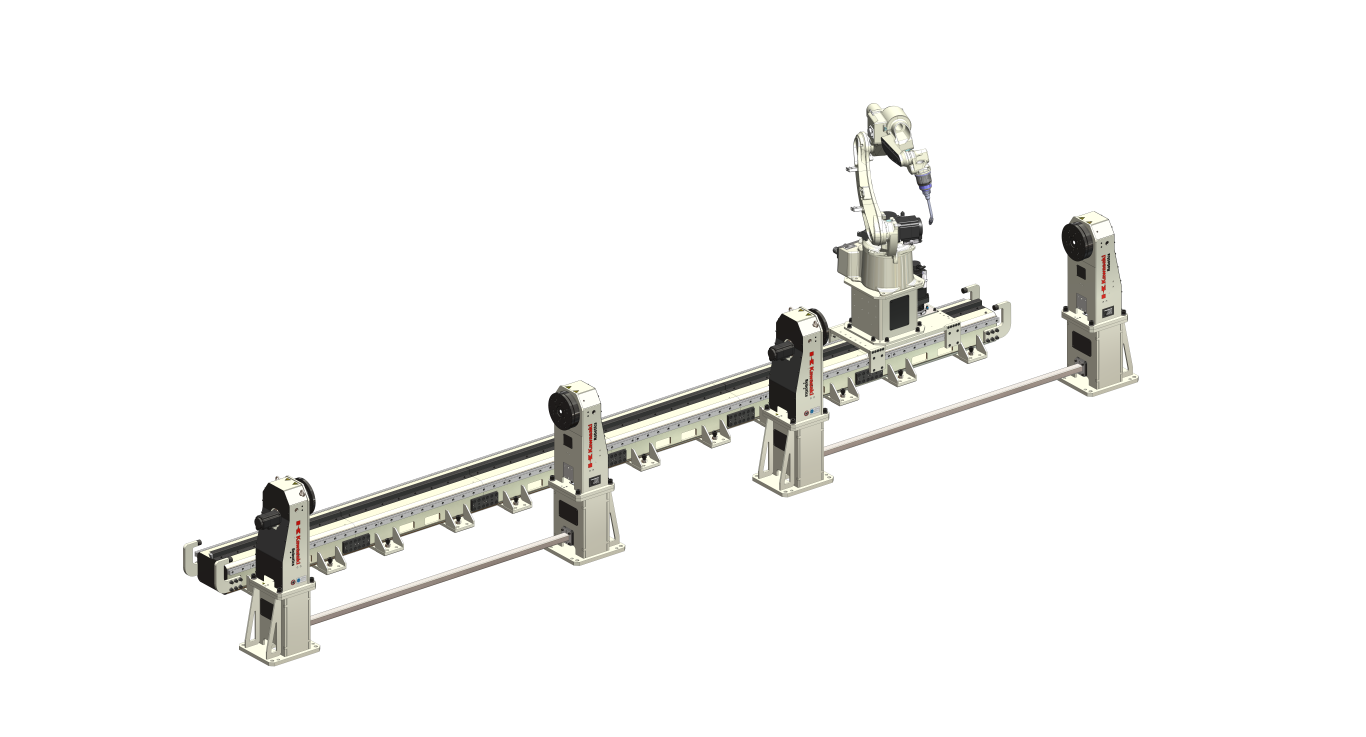
- Headstock-Tailstock Positioners
For long or heavy weldments, a traditional table positioner may not provide sufficient support.
Headstock-tailstock systems use:
- A powered headstock
- A supporting tailstock
The workpiece is mounted between the two supports.
This configuration is ideal for:
- Machine frames
- Structural weldments
- Chassis components
- Long fabricated assemblies
- Ferris Wheel Positioners
Ferris wheel positioners use two or more workstations mounted on a rotating frame.
While the robot welds one part, an operator loads the next part on the opposite side.
This reduces idle time and increases production throughput.
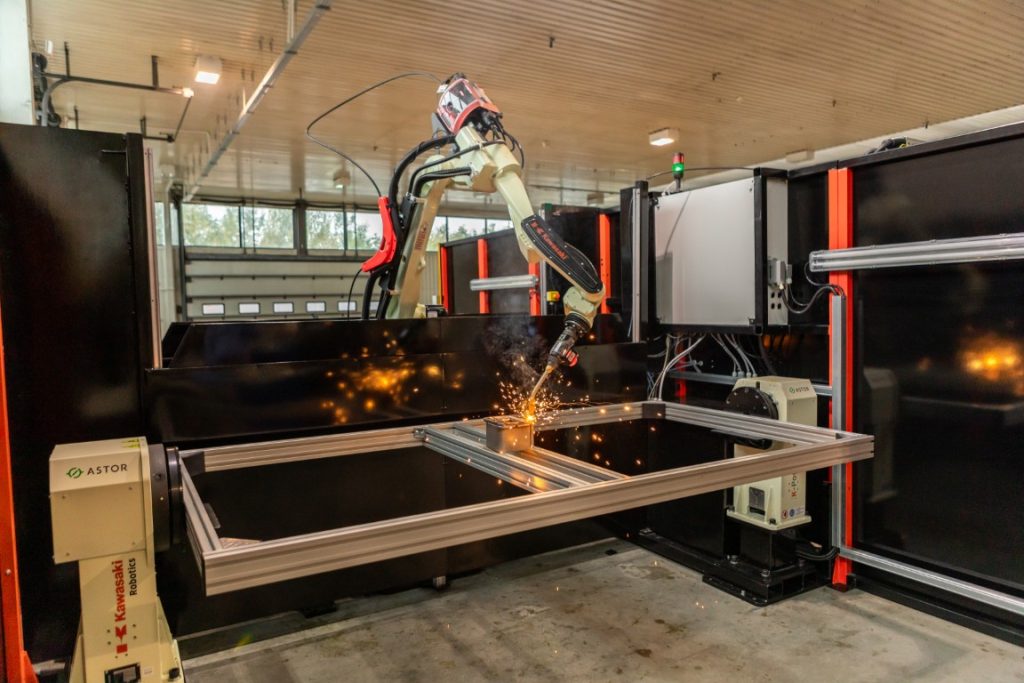
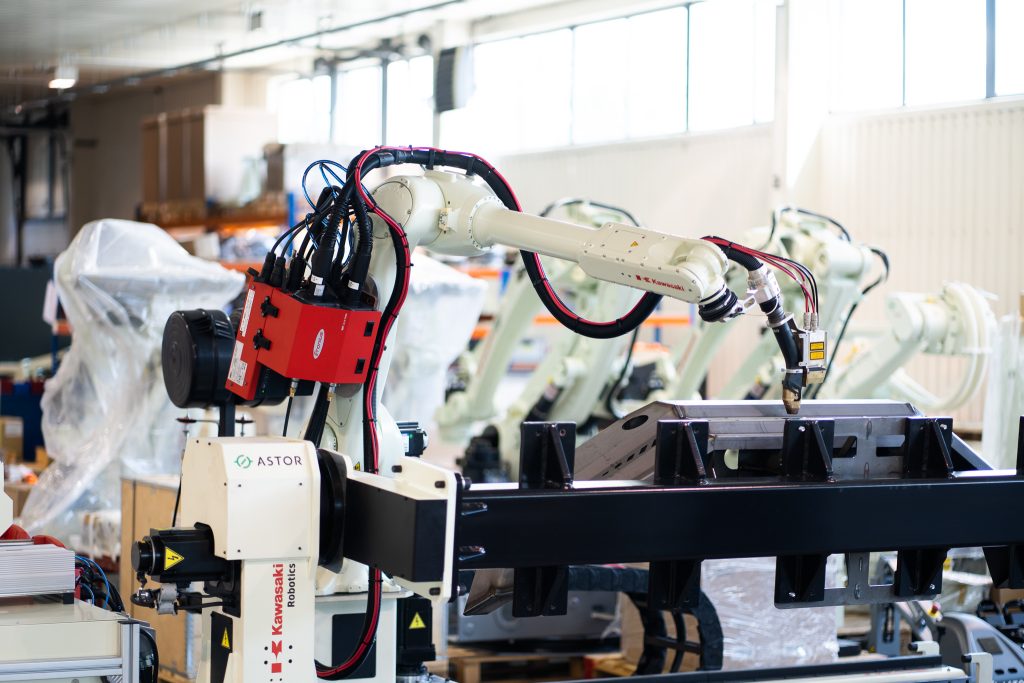
How Welding Positioners Work with Robots
One of the biggest advantages of modern positioners is their ability to operate as external robot axes.
Instead of programming the robot and positioner separately, both systems work together through coordinated motion.
For example:
A robot welding a large frame may simultaneously:
- Move its welding torch
- Rotate the workpiece
- Adjust torch angle
- Maintain a constant weld path
The operator sees a smooth, continuous welding process even though multiple axes are moving simultaneously.
This capability greatly simplifies programming while improving weld consistency.
What Is the Difference Between a Welding Fixture and a Welding Positioner?
These two terms are often confused.
Welding Fixture
A fixture is designed to:
- Locate the workpiece
- Hold it securely
- Ensure repeatable positioning
The fixture does not typically move during the process.
Welding Positioner
A positioner is designed to:
- Rotate the part
- Tilt the part
- Reorient the part during welding
In most robotic welding cells, the fixture is mounted directly onto the positioner.
Simply put – the fixture holds the part, the positioner moves the part.
Both are equally important to achieving a repeatable welding process.
When Do You Need a Welding Positioner?
A welding positioner should be considered when parts require multiple welding angle. Complex weldments often contain joints that cannot be accessed efficiently from a fixed position.
There are several situations when positioner is mostly needed.
- Weld Quality Is Critical
Positioners help maintain optimal welding orientation throughout the process.
- Cycle Times Need Improvement
Reducing unnecessary robot motion can significantly increase productivity.
- Parts Are Large or Heavy
Positioners allow large components to be manipulated safely and accurately.
- Robotic Welding Is Being Implemented
Most successful robotic welding installations incorporate some form of workpiece positioning. Without a positioner, the robot may spend excessive time moving around the part rather than welding.
Key Factors When Selecting a Welding Positioner
Before choosing a positioner, manufacturers should evaluate several factors.
- Payload Capacity
The total weight of:
- The workpiece
- The fixture
- Any tooling
must be considered.
- Center of Gravity
This is one of the most overlooked design factors.
A positioner may support a certain payload only when the center of gravity remains within specified limits.
- Rotational Torque
Heavy or unbalanced parts require greater torque to accelerate and decelerate safely.
- Tilting Torque
For dual-axis systems, tilt capacity is often more important than rotational capacity.
- Future Production Requirements
Many manufacturers underestimate future flexibility needs.
A modular positioner system can accommodate future product changes more easily.
Typical Applications for Welding Positioners
Welding positioners are widely used in:
- Structural steel fabrication
- Agricultural equipment manufacturing
- Construction machinery
- Automotive suppliers
- Energy equipment production
- Pressure vessel fabrication
- Trailer manufacturing
- Aerospace components
- Heavy industrial machinery
Any application involving repetitive welding can benefit from proper workpiece positioning.
What Productivity Improvements Can Be Expected?
The benefits of welding positioners extend far beyond convenience.
Manufacturers frequently achieve:
- Higher weld quality
- Improved repeatability
- Reduced rework
- Faster cycle times
- Better robot utilization
- Easier programming
- Improved operator safety
In many robotic welding applications, the productivity gains provided by the positioner can equal or exceed those provided by the robot itself.
Conclusion
A welding positioner is far more than a rotating table.
It is a critical component that allows manufacturers to improve weld quality, increase throughput, and maximize the value of their robotic welding investment.
Whether used in a simple pipe welding application or a fully automated robotic welding cell, the right positioner helps ensure that welds are performed in the best possible position every time.
For many manufacturers, investing in the right welding positioner is not just an equipment decision—it’s a strategic decision that directly impacts productivity, quality, and profitability.