
What Is a Robot Track and When Do You Need One?
Industrial robots have transformed manufacturing by improving productivity, quality, and repeatability. However, one limitation remains common across many applications: reach.
Even the largest industrial robots can only access a limited workspace. When parts become larger, production lines become longer, or multiple workstations need to be serviced by a single robot, manufacturers often face a critical question:
Should we buy a larger robot, add another robot, or extend the robot’s reach using a robot track?
In many cases, the most efficient solution is a robot track.
This article explains what robot tracks are, how they work, and when they make sense from both technical and economic perspectives.
What Is a Robot Track?
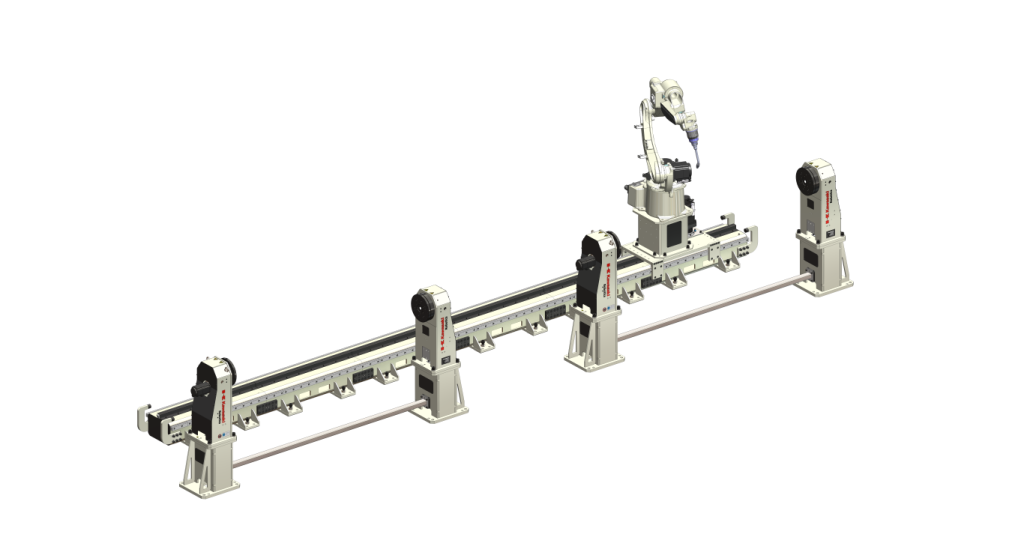
A robot track, sometimes called a robot rail, linear axis, or seventh axis, is a motorized system that allows an industrial robot to move along a straight path. Instead of being mounted in a fixed location, the robot is installed on a carriage that travels along a rail. This transforms the robot from a stationary machine into a mobile automation system capable of covering significantly larger work areas. The track itself becomes an additional axis that is fully integrated into the robot controller.
As a result, the robot can move simultaneously:
- Along the rail
- Through its six robot axes
- In coordinated motion with positioners or other external axes
In modern robotic cells, the robot track is treated as another servo-controlled axis rather than a separate machine.
Why Do Industrial Robots Need Tracks?
The primary purpose of a robot track is simple:
Increase the robot’s working envelope.
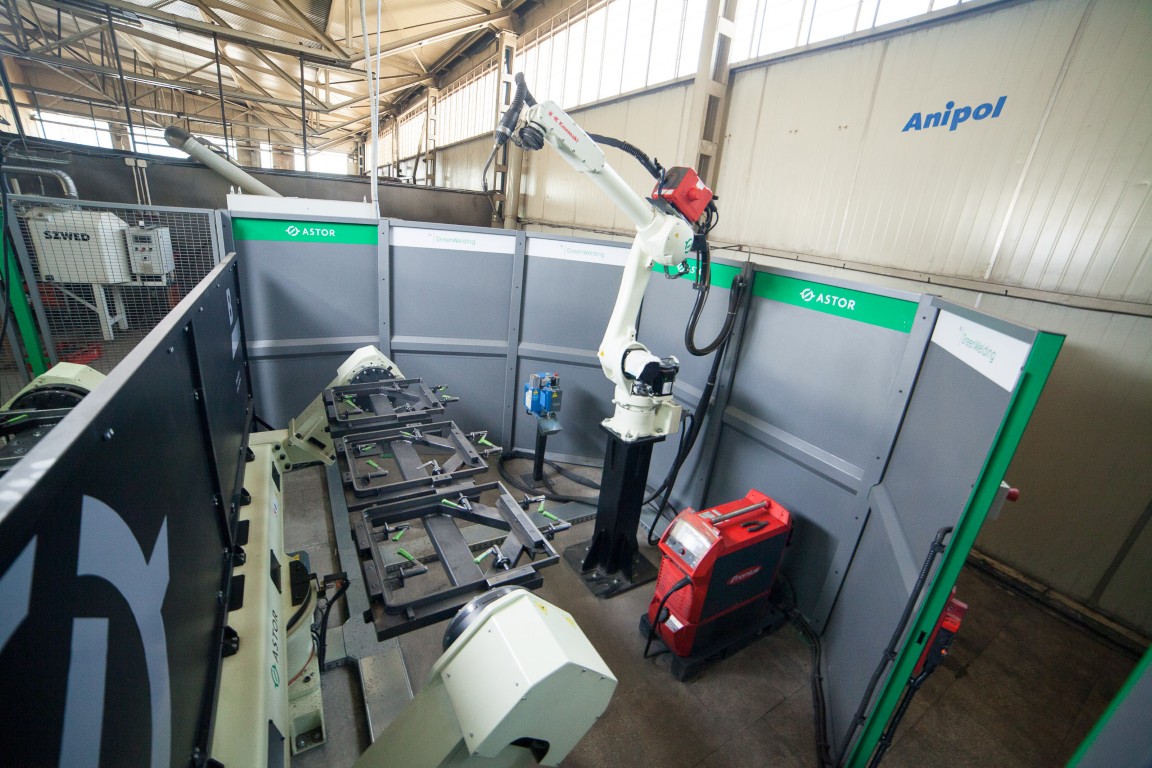
Consider a robotic welding cell producing 20-foot steel frames. A robot with a reach of 3 meters may be able to access only part of the assembly.
Without a track, manufacturers often face three options:
- Reposition the part manually
- Install multiple robots
- Use a larger robot
Each solution increases costs and complexity.
A robot track allows a single robot to travel along the workpiece while maintaining optimal welding positions. The result is greater flexibility and lower investment costs.
How Does a Robot Track Work?
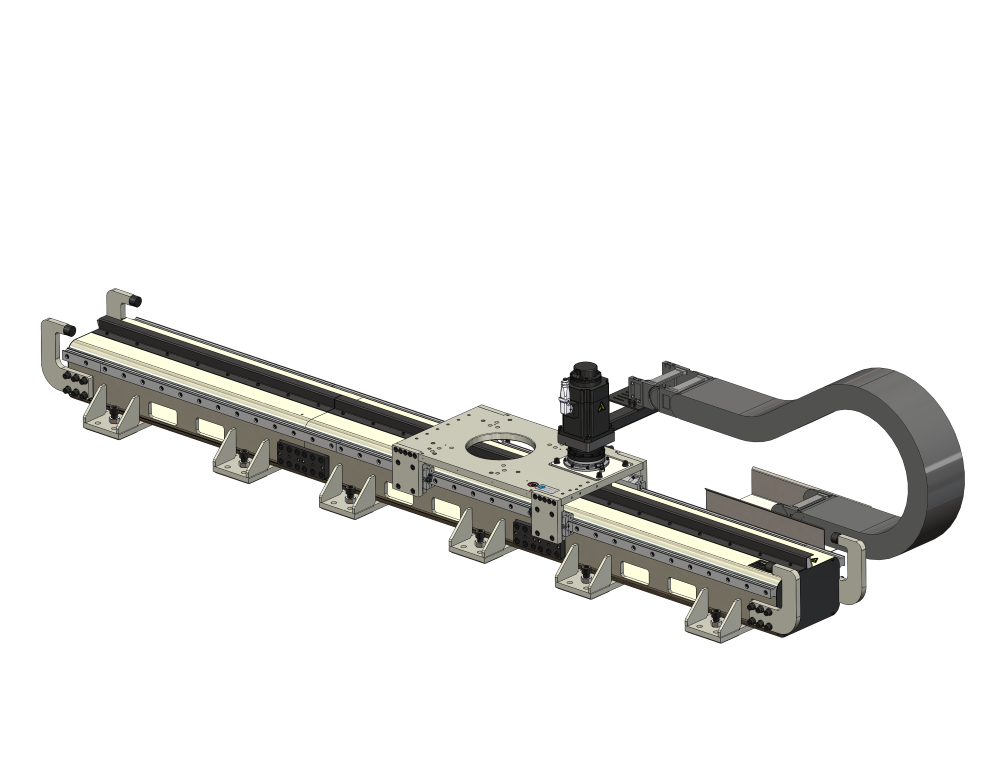
A typical robot track consists of:
Rail Structure
The rail serves as the foundation of the system and supports the robot and carriage.
Depending on the application, tracks can range from a few feet to more than 100 feet in length.
Drive System
Most industrial tracks use:
- Servo motors
- Precision gearboxes
- Rack-and-pinion drives
- Linear guides
These components ensure smooth motion and accurate positioning.
Encoder System
High-resolution encoders provide position feedback to maintain precise robot movement.
Integrated Control
The track is synchronized with the robot controller, allowing coordinated movement between all axes.
To the robot programmer, the track behaves like an additional robot joint.
Common Applications for Robot Tracks
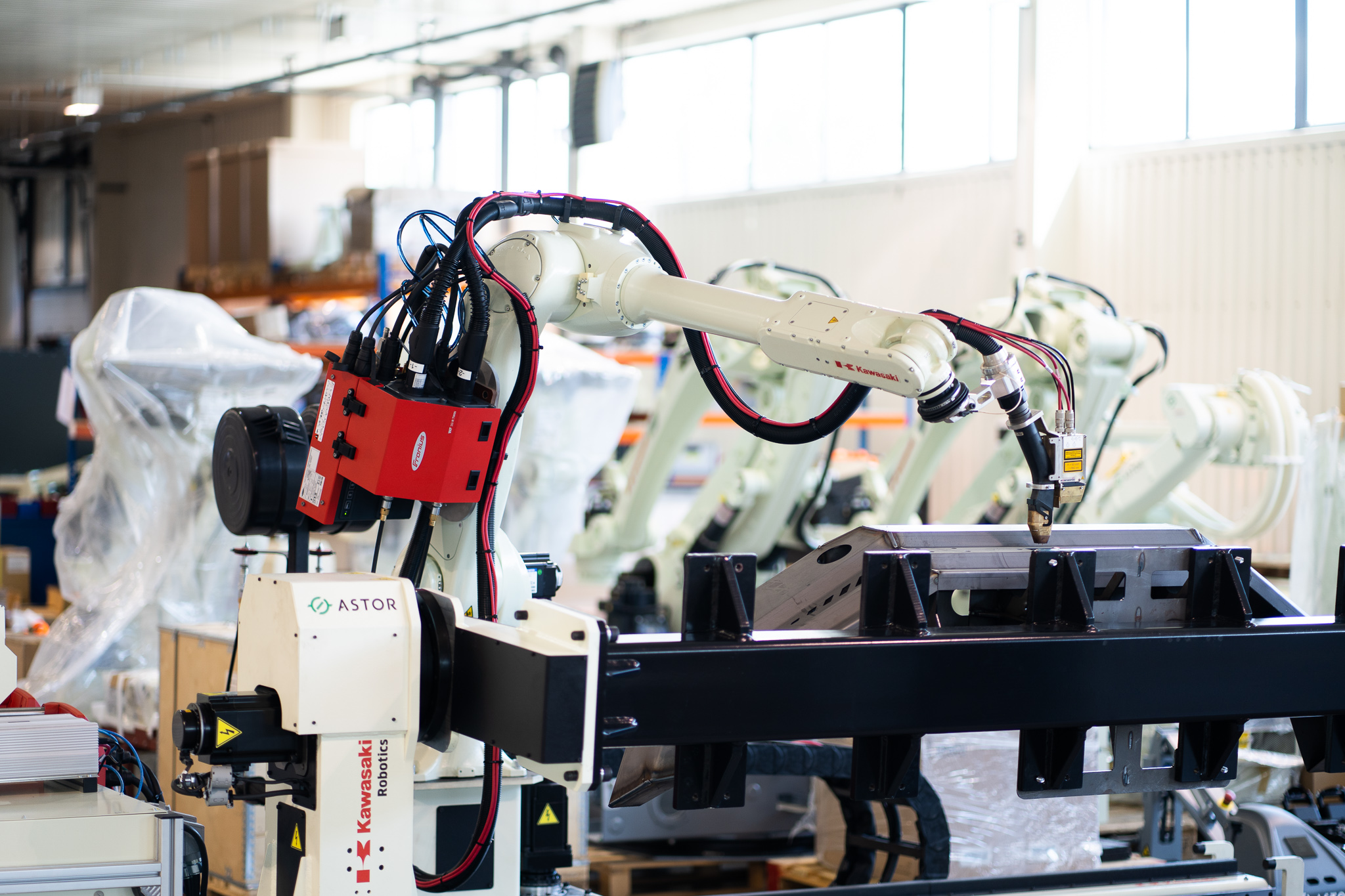
- Robotic Welding
Welding is one of the most common applications for robot tracks.
Typical examples include:
- Structural steel fabrication
- Heavy equipment manufacturing
- Trailer production
- Agricultural machinery
- Shipbuilding
Rather than moving large parts through multiple stations, the robot travels along the weldment.
This approach improves productivity while reducing material handling.
- Large Part Manufacturing
Products such as:
- Wind turbine components
- Industrial machinery
- Railcar assemblies
- Storage tanks
often exceed the working envelope of a fixed robot.
A track allows one robot to access the entire structure.
- Machine Tending
One robot can service multiple CNC machines positioned along a production line.
This significantly improves robot utilization and reduces automation costs.
- Material Handling
Tracks are frequently used in warehouses and logistics applications where robots must cover long distances while maintaining high positioning accuracy.
Robot Track vs Bigger Robot
Many manufacturers initially assume they need a larger robot.
However, larger robots introduce several challenges:
- Higher purchase cost
- Larger footprint
- Increased energy consumption
- Reduced flexibility
In many applications, adding a robot track provides greater reach at a lower total cost.
For example:
A 3-meter robot installed on a 6-meter track can effectively service a much larger area than a fixed robot with greater arm reach.
This often results in a better return on investment.
Robot Track vs Second Robot
Another common question is whether to install a second robot. The answer depends on production requirements.
A second robot may be justified when:
- Simultaneous operations are required
- Cycle times are extremely short
- Redundancy is necessary
However, many applications do not require two robots.
A single robot on a track can often perform the work of multiple stationary robots while reducing programming, maintenance, and capital costs.
Understanding Coordinated Motion
One of the biggest advantages of robot tracks is coordinated motion.
Without coordinated motion:
- The track moves
- The robot stops
Then:
- The track stops
- The robot starts again
This creates inefficient stop-and-go operation.
With coordinated motion the robot and track move simultaneously.
For example, during a long weld seam:
- The robot maintains torch orientation
- The track moves continuously
- The weld proceeds without interruption
This improves weld quality and reduces cycle time.
How to Determine If You Need a Robot Track
A robot track should be considered if:
- Your Parts Are Larger Than the Robot Reach
If the robot cannot access all process locations without repositioning the workpiece, a track may be the most effective solution.
- You Need to Service Multiple Stations
Tracks allow a single robot to move between:
- Welding stations
- CNC machines
- Inspection stations
- Material handling points
- You Want to Reduce Capital Investment
Instead of purchasing multiple robots, a single robot with a track can often achieve the same result.
- Your Facility Has Limited Floor Space
A track can increase coverage without requiring additional robotic cells.
Key Factors When Selecting a Robot Track
Before purchasing a track system, engineers should evaluate:
Track Length
How much travel distance is actually required?
Oversizing the track increases cost without adding value.
Payload Capacity
The track must support:
- Robot weight
- End-of-arm tooling
- Dynamic loads during acceleration
Positioning Accuracy
Applications such as welding and machining may require very high positional accuracy.
Speed Requirements
Cycle time objectives will influence:
- Motor sizing
- Drive selection
- Track design
Future Expansion
Many manufacturers underestimate future requirements.
Selecting a modular track system can simplify future expansion projects.
Typical ROI of a Robot Track
The economic benefits of robot tracks often include:
- Increased robot utilization
- Reduced labor requirements
- Fewer robots required
- Lower floor-space costs
- Improved production flexibility
In many welding and fabrication applications, the investment can pay for itself within one to three years depending on utilization and labor savings.
Conclusion
A robot track is one of the most effective ways to expand the capabilities of an industrial robot. Rather than investing in larger robots or multiple robotic cells, manufacturers can often achieve greater flexibility and productivity by adding a linear axis. For applications involving large weldments, long production lines, multiple workstations, or heavy fabrication, a robot track can dramatically increase the value of an automation investment. When properly integrated, a robot track becomes much more than a rail—it becomes a critical component of a highly flexible robotic manufacturing system.