
When Does Robotization Pay Off? How to Avoid Mistakes?
In robotization, the implementation process is just as important as the technology itself. It depends on the current business situation, market environment, and the specific characteristics of the enterprise. These factors must be taken into account when calculating return on investment.
Once a manufacturing company has made the decision that robotization is worthwhile, the time comes for a sober financial reflection on the undertaking, along with an analysis of the related process challenges. Although return on investment (ROI) is calculated using a simple formula (net profit / total costs × 100%), many companies make mistakes already at the estimation stage that can significantly affect whether the implementation turns out to be a success or a failure. The most common ones are as follows:
- Treating a robotic application as a “standalone automated island.” Managers estimating ROI often fail to consider instability in operations at earlier stages of the process, especially if those stages are not automated. When a human is responsible for executing a task, process performance depends heavily on their skills and decisions—in practice, it is therefore often lower than assumed.
Effect: The assumed productivity after modernization is overly optimistic / ROI overstated.
- Incorrect assumptions regarding Overall Equipment Effectiveness (OEE). Even the best robot will not operate without human assistance. It is often assumed that a robotic application will be available 24/7. However, factors such as operational downtime, time required for start-up, or the need to integrate the workstation to adapt the production process (e.g., recipes) to product changes should be taken into account.
Effect: Full utilization assumption error / ROI overstated.
- Ignoring soft factors such as quality improvement resulting from process repeatability. From the employer’s perspective, this increases the attractiveness of jobs by eliminating repetitive, physically demanding work. It also enhances the company’s image, making it easier to acquire new orders—robotization ensures a measurable, high-quality production process.
Effect: ROI understated / projects rejected despite real profitability.
- Lack of scenarios and variants (pessimistic / realistic / optimistic). Flexible robotization can be planned as a scalable solution that can be implemented in stages depending on market scenarios. Ignoring scenarios leads to a one-sided perspective.
Effect: ROI is theoretically well calculated at the estimation stage but becomes outdated during implementation.
- Assuming that manual labor will be available. In today’s market reality, the belief that workers will always be available is risky. Many companies, when calculating ROI, assume that the current employment level can be maintained, recruitment will be possible at similar costs and within similar timeframes, and employee turnover will not increase. In many industries, such assumptions are already unrealistic, and demographic trends indicate that the situation will become even more challenging in the future.
Effect: Ignoring macroeconomic factors, “status quo” assumptions / ROI understated.
What Other Mistakes—Not Related to ROI Calculation—Can Affect Project Success?
Excessive focus on ROI alone causes companies to overlook the long-term context of implementation and the conditions for years of operation of the deployed solutions. At this point, companies often forget the importance of proven technological partnerships. In fact, only a trusted supplier with extensive experience can ensure operational continuity, guarantee the ability to meet demand, and provide resilience against labor market turbulence.
Another mistake is robotizing process elements that are not ready for it. Sometimes, although at first glance the process appears well-structured—with standard cycles and seemingly stable assumptions regarding materials and products—mapping the actual production flow may reveal significant deviations in practice. Some components fall within tolerances exceeding the assumptions, and the process itself may be highly variable. In such cases, robotizing the entire process is not always cost-effective. A better approach is to identify the portion of variability that is both the most repeatable and the most relevant from a business perspective. In high-variability environments, success belongs not to projects that attempt to handle all variants, but to those that deliberately exclude the least significant 20–40% of cases. This approach enables effective robotization with short ROI periods.
A very common yet often overlooked mistake in planning robotization is a one-dimensional perspective, i.e., focusing solely on technology. What is far more important is defining the strategy of the enterprise planning robotization in advance. If proven robotic solutions are available on the market, it is worth adopting ready-made, validated technologies offered by integration companies.
However, if the goal is to build a competitive advantage by retaining production know-how, an appropriate approach may be robotization carried out by internal teams, supported and trained by industrial robot suppliers. In turn, for R&D projects or those combining technologies—for example, with elements of artificial intelligence—it is advisable to conduct a pilot first, allowing project assumptions to be verified on a smaller scale. In such cases, it is beneficial to engage a long-term, trusted partner or technology provider.
Some companies simultaneously implement robotization using all three approaches, effectively scaling and transforming production with industrial robots—this is also a viable option worth considering.
Which Industries Most Often Achieve Good Returns on Investment?
Among our clients, we observe growing awareness of potential risks and mistakes in the robotization planning process. More and more companies are able to avoid them, better assess investment profitability, and execute projects in cooperation with trusted partners. This applies to a wide range of industries as well as both small and large manufacturing enterprises.
The food industry successfully implements robotization projects that facilitate packaging processes, especially placing products into packaging, palletizing, depalletizing, and labeling.
The pharmaceutical industry focuses on the production of disposable medical devices while maintaining appropriate hygiene conditions.
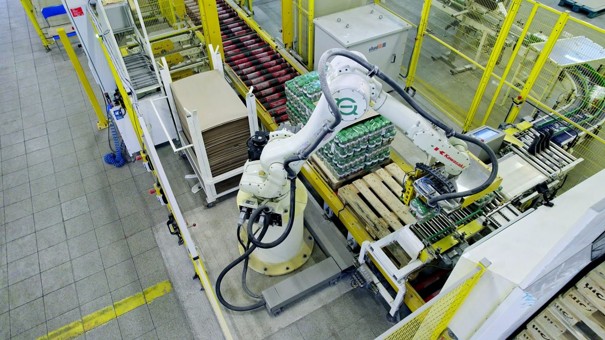
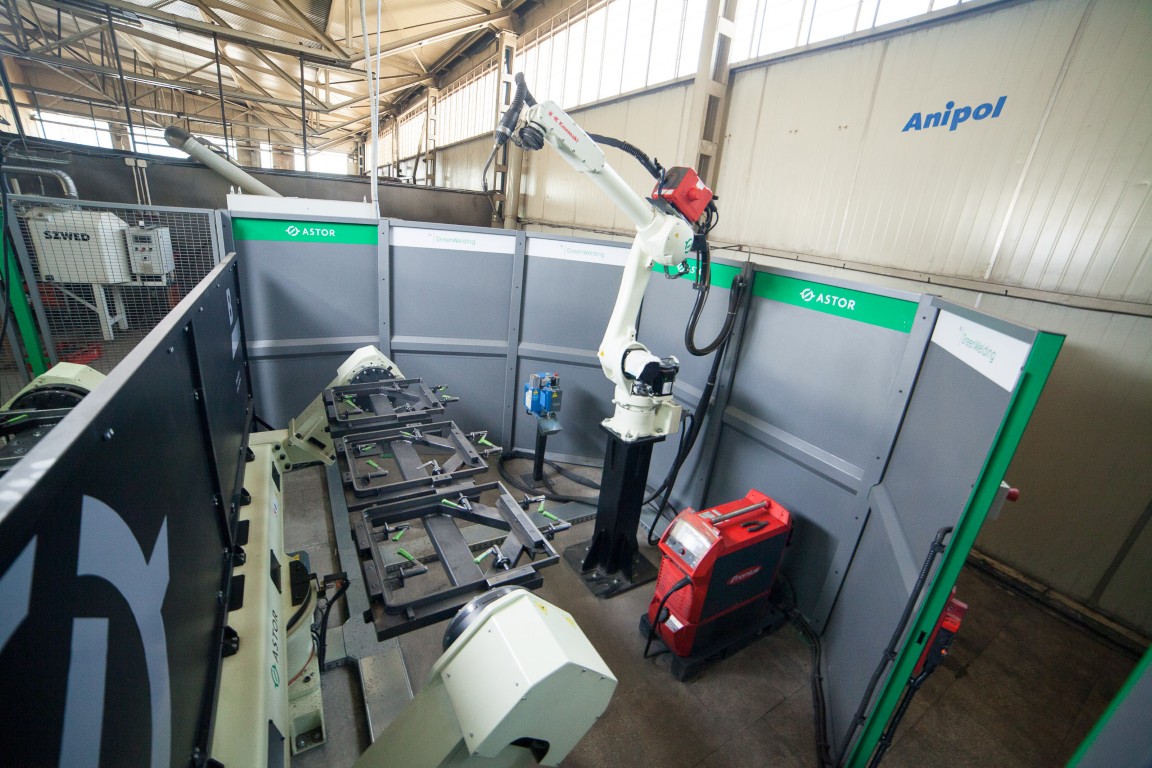
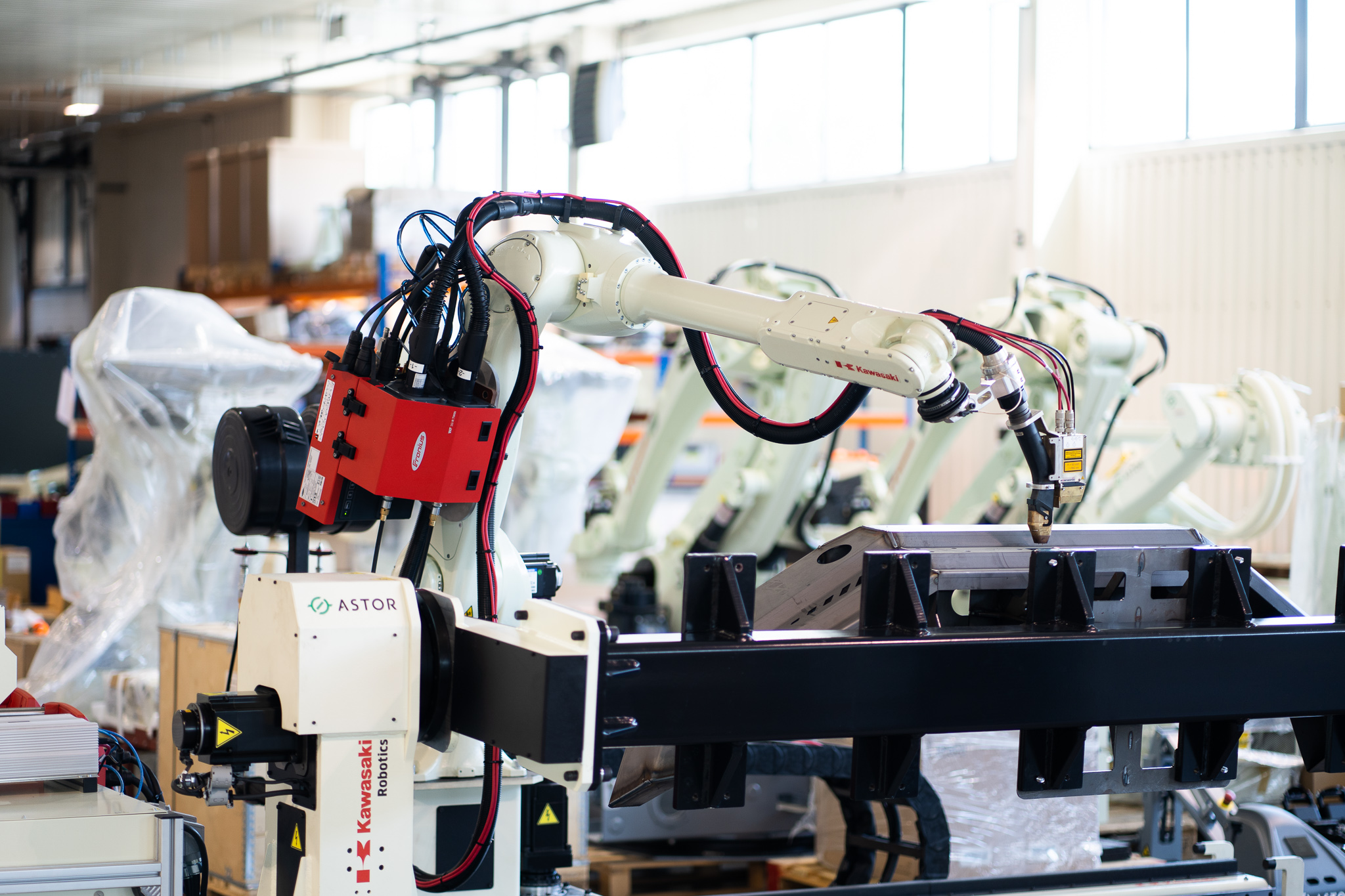
The metal industry robotizes welding, loading and unloading of machines such as CNC machining centers, press brakes, and laser cutters. Robots are also used for surface processing: deburring and finishing of components. In logistics and e-commerce, companies successfully robotize sorting and order picking. The electronics industry focuses on robotic assembly, fastening components, verifying assembly correctness (presence, orientation, defect detection using vision systems), sorting, and pick-and-place applications.
Among robotization projects implemented by our clients, the payback period most often ranges from 12 to 36 months. In the case of standard robotic applications (such as welding or palletizing), where implementation time is very short, there are projects in which ROI is achieved within less than 12 months.
We do not perceive robotization as a unique value limited to specific industries, but rather to individual production operations—which are surprisingly similar across different production profiles. Similar pitfalls also occur across industries during the investment process. Avoiding them is essential to ensure that implementations deliver maximum business value.